
- Blog Details
How to Launch Your Own Medicine Brand in India with Third-Party Manufacturing?
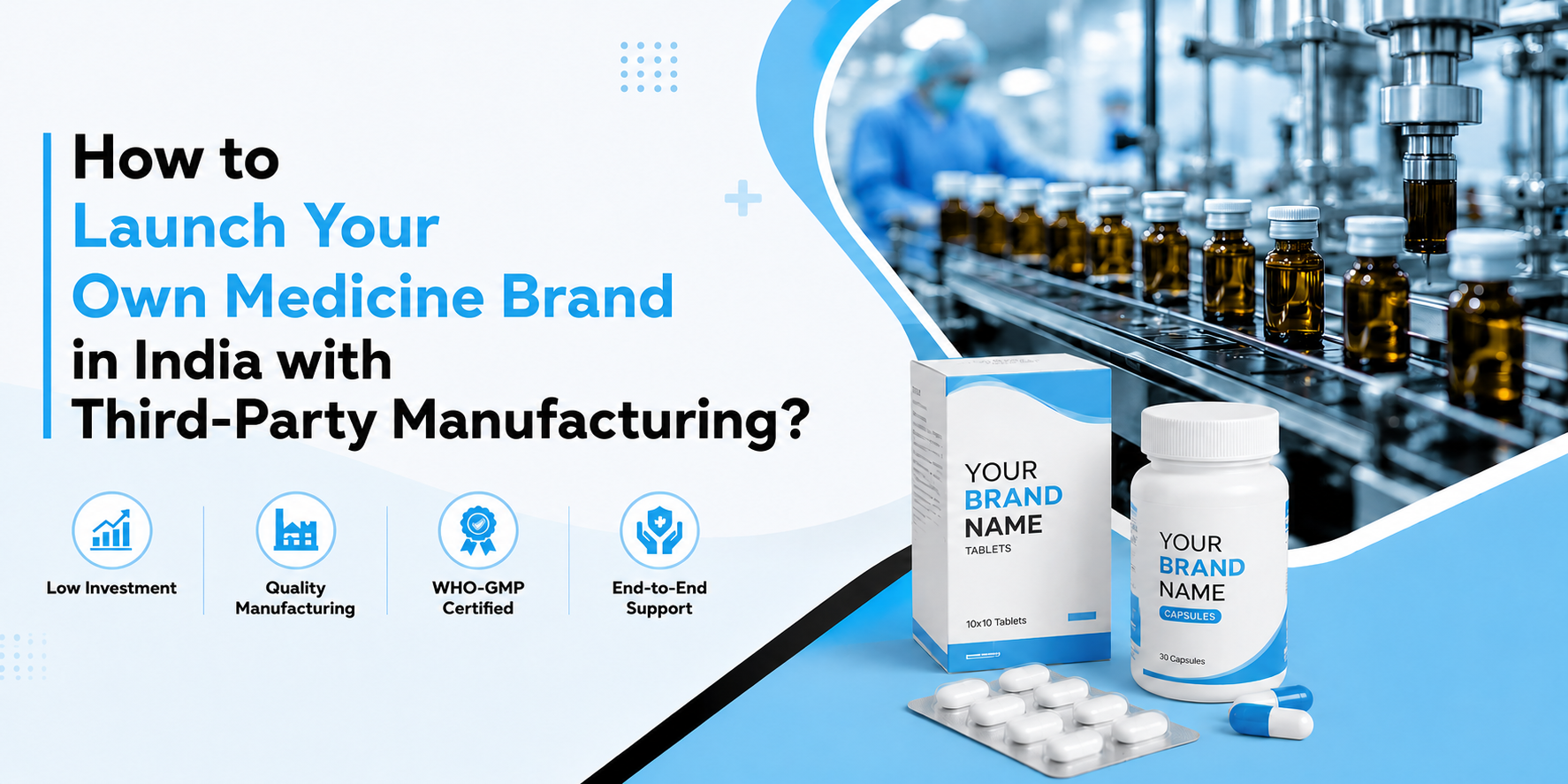
The Indian pharmaceutical industry is one of the biggest in the world, and still growing at an enormous rate. Due to an increased demand for quality drugs, many entrepreneurs, wholesalers, healthcare practitioners, and startups are interested in creating their own pharmaceutical brands.
The creation of a manufacturing unit involves huge costs in terms of investment, licensing, infrastructure, machinery, and expertise. That’s why most of the successful pharma companies consider third-party manufacturing a good way out.
Are you trying to figure out how to create your own medicine brand in India with the help of third-party manufacturing?
This guide covers all the aspects of this business venture.
What Is Third-Party Pharma Manufacturing?
When we talk about third-party pharma manufacturing we are talking about a situation where one company makes medicines for another company. This is also called contract manufacturing. So the pharmaceutical manufacturer makes the medicines for the company and then that company sells these medicines under its own name.
In this way of doing things:
- The manufacturer is in charge of making the medicines.
- The company that owns the brand is in charge of selling and marketing the medicines.
- The medicines are made according to the rules that the government sets.
- Companies can start selling medicines without having to build their factory to make them.
This way of doing things has become very popular for companies that want to get into the industry. Third-party pharma manufacturing is an option for many businesses. The third-party pharma manufacturing model is used by a lot of companies because it is convenient and cost effective.
Can You Launch Your Own Medicine Brand in india
Without Owning a Manufacturing Unit?
Yes.
One big advantage of third-party manufacturing is that business owners can launch and sell medicines under their brand name without having their own factory.
The third-party manufacturing company handles making the products while the brand owner focuses on areas, like:
- Product selection
- Creating their brand
- Marketing their products
- Getting products to customers
- Growing their business
This greatly reduces the costs of starting up and running the business.
Why is third-party manufacturing so popular in India?
Third-party manufacturing is really popular because it has a lot of benefits for businesses.
Key Benefits
Benefit | Advantage |
Low Investment | No factory setup required |
Faster Product Launch | Reduced time-to-market |
Professional Manufacturing | Quality-controlled production |
Regulatory Support | Assistance with documentation |
Scalability | Easy business expansion |
Lower Risk | No manufacturing overheads |
For startups and emerging pharma companies, this business model provides an efficient pathway to market entry.
Why Baddi Is India’s Leading Pharma Manufacturing Hub
The manufacturing environment in India is confined to very few significant areas, and Baddi has turned out to be one of the most significant pharmaceutical clusters in the nation.
Strengths of Manufacturing at Baddi
- Significant pharmaceutical cluster
- Access to skilled labor
- Significant industrial infrastructure
- Logistics and transport facilities available easily
- Many pharmaceutical manufacturing facilities present
- Low cost of manufacturing
All of these make Baddi an ideal location for pharmaceutical companies looking for manufacturing partners.
Step 1: Identify Your Target Market
Before launching your medicine brand, determine who your customers will be.
Common target segments include:
General Medicine
- Fever medicines
- Pain relief products
- Antibiotics
Specialty Segments
- Cardiology
- Diabetology
- Dermatology
- Gynecology
- Pediatrics
Nutraceutical Segment
- Multivitamins
- Protein supplements
- Herbal products
- Immunity boosters
Choosing a focused niche helps build a stronger brand identity.
Step 2: Register Your Business
To operate legally, establish a registered business entity.
Common options include:
- Sole Proprietorship
- Partnership Firm
- LLP
- Private Limited Company
A Private Limited Company is often preferred by growing pharmaceutical businesses due to its credibility and scalability.
Step 3: Obtain GST Registration
GST registration is essential for invoicing and commercial transactions.
Benefits include:
- Legal business operations
- Tax compliance
- Enhanced business credibility
- Easier dealings with distributors and retailers
Step 4: Understand Required Licenses
The licensing requirements may vary depending on business operations and state regulations.
Common requirements include:
Essential Documents
- Company Registration Documents
- GST Registration
- Trademark Application
- Drug-related permissions (where applicable)
Always consult regulatory professionals for compliance guidance.
Step 5: Choose the Right Product Portfolio
Selecting the right products is one of the most important decisions for your brand.
Popular Pharma Products
Tablets
- Paracetamol
- Anti-allergic tablets
- Antibiotics
- Multivitamins
Capsules
- Nutraceutical capsules
- Herbal capsules
- Protein supplements
Syrups
- Pediatric syrups
- Cough syrups
- Digestive formulations
Start with products that have stable market demand and growth potential.
Step 6: Choose a Reliable Third-Party Manufacturer
The success of your medicine brand largely depends on your manufacturing partner.
What to Look For
Quality Standards
Choose manufacturers that follow:
- WHO-GMP guidelines
- Quality control procedures
- Standard manufacturing practices
Product Range
A broader product portfolio allows future expansion.
Packaging Support
Professional packaging improves product appeal and brand recognition.
Documentation Assistance
A reliable manufacturer should provide complete product documentation and support.
Step 7: Create Your Brand Identity
A strong brand helps distinguish your products from competitors.
Brand Development Essentials
Brand Name
Select a memorable and professional brand name.
Logo Design
Develop a clean and recognizable logo.
Packaging Design
Packaging should include:
- Product name
- Composition
- Batch information
- Manufacturing details
- Regulatory information
Professional packaging can significantly influence purchasing decisions.
Step 8: Register Your Trademark
Trademark registration helps keep your brand identity safe.
Benefits of Trademark Registration
- Legal ownership
- Brand protection
- Competitive advantage
- Long-term business value
Registering your trademark early can help avoid future disputes.
Step 9: Place Your First Manufacturing Order
When you have picked a product, gotten the packaging approved and finished all the paperwork you can put in your order.
Things to think about when you do this are:
- How much people want to buy the product
- How money you have to spend
- Making sure you have products, in stock
- If you can get the products to the people who bought them
Lots of companies start out with just a few things and then make more as they sell more products.
How Much Does It Cost to Launch a Medicine Brand in India?
One of the most common questions among entrepreneurs is about investment requirements.
Estimated Startup Costs
Expense Category | Estimated Cost |
Business Registration | ₹5,000 – ₹25,000 |
GST Registration | As applicable |
Trademark Registration | ₹4,500 – ₹15,000 |
Packaging Design | ₹10,000 – ₹50,000 |
Initial Product Order | ₹50,000 – ₹5,00,000+ |
Marketing & Promotion | Variable |
The actual investment depends on product range, packaging requirements, and business goals.
Third-Party Manufacturing vs Own Manufacturing Unit
Factor | Own Manufacturing Unit | Third-Party Manufacturing |
Initial Investment | ₹1–5 Crore+ | ₹50,000–₹5 Lakh+ |
Infrastructure | Required | Not Required |
Machinery Cost | High | None |
Setup Time | 1–2 Years | Few Weeks |
Compliance Burden | High | Lower |
Operational Risk | High | Lower |
Scalability | Moderate | High |
For most startups, third-party manufacturing offers a faster and more cost-effective entry into the pharmaceutical market.
How to Market Your Medicine Brand Successfully
Manufacturing alone does not guarantee success. A strong marketing strategy is equally important.
Effective Marketing Channels
- Medical Representatives
- Retail Pharmacies
- Distributors
- Stockists
- Healthcare Professionals
- Digital Marketing
- B2B Networking
Building long-term relationships with healthcare stakeholders can significantly improve brand growth.
Common Mistakes to Avoid
Avoiding these mistakes can save time and money.
Common Errors
❌ Choosing products without market research
❌ Ignoring trademark registration
❌ Selecting manufacturers solely based on price
❌ Poor packaging design
❌ Weak distribution planning
❌ Neglecting compliance requirements
❌ Lack of long-term branding strategy
Conclusion
Establishing your own pharmaceutical brand through third party manufacturing in India is possibly the most productive way to enter the pharmaceuticals business. It allows you to save on the huge expense of developing manufacturing facilities and helps you to concentrate on the branding and business aspects of your venture.
Choosing the right products, creating a good brand image and working with a good manufacturer will help you to create a good pharmaceutical brand and take advantage of India’s booming healthcare industry.
For any business looking for an effective entry into the pharmaceuticals business, third party manufacturing continues to be the best option.